Istanbul Medeniyet University marked a first in 2025 by celebrating World Play Day with sustainability-themed games. Organized by the Istanbul Medeniyet University Sustainability Student Club (IMUSUS) and supported by the Turkish Ministry of Youth and Sports, the event was part of the “Transformation Festival” and aimed to raise awareness about the Sustainable Development Goals (SDGs) through gamification.
One of the most notable events of the Transformation Festival, held between May 15 and June 15, 2025, was the “Sustainability Games” event, specially prepared for World Play Day on June 11. Celebrated annually on June 11, World Play Day was marked this year at Istanbul Medeniyet University with sustainability-focused content. Participants had the opportunity to experientially explore themes such as climate change, adaptation, biodiversity, healthy living, public health, disaster management, cooperation, environmental education, and sustainable development goals through three different games. Hosted by the university’s Sustainability Office, the event was open not only to students and staff but also to external participants. In this way, the event contributed to sustainability awareness both within the university and on a societal scale. The most important point that stood out at the event was that the games were not only fun, but also had educational and thought-provoking content. Participants experienced different dimensions of sustainability by taking on different roles in each game. This approach demonstrated how game-based learning can be an effective method in the field of sustainability.
The Transformation Festival, implemented in line with Istanbul Medeniyet University’s sustainable campus vision, was designed not only as an informative program but also as a production-based initiative aimed at creating behavioral change in individuals regarding waste reduction. Throughout the festival, workshops, training sessions, awareness-raising activities, and hands-on events were held.
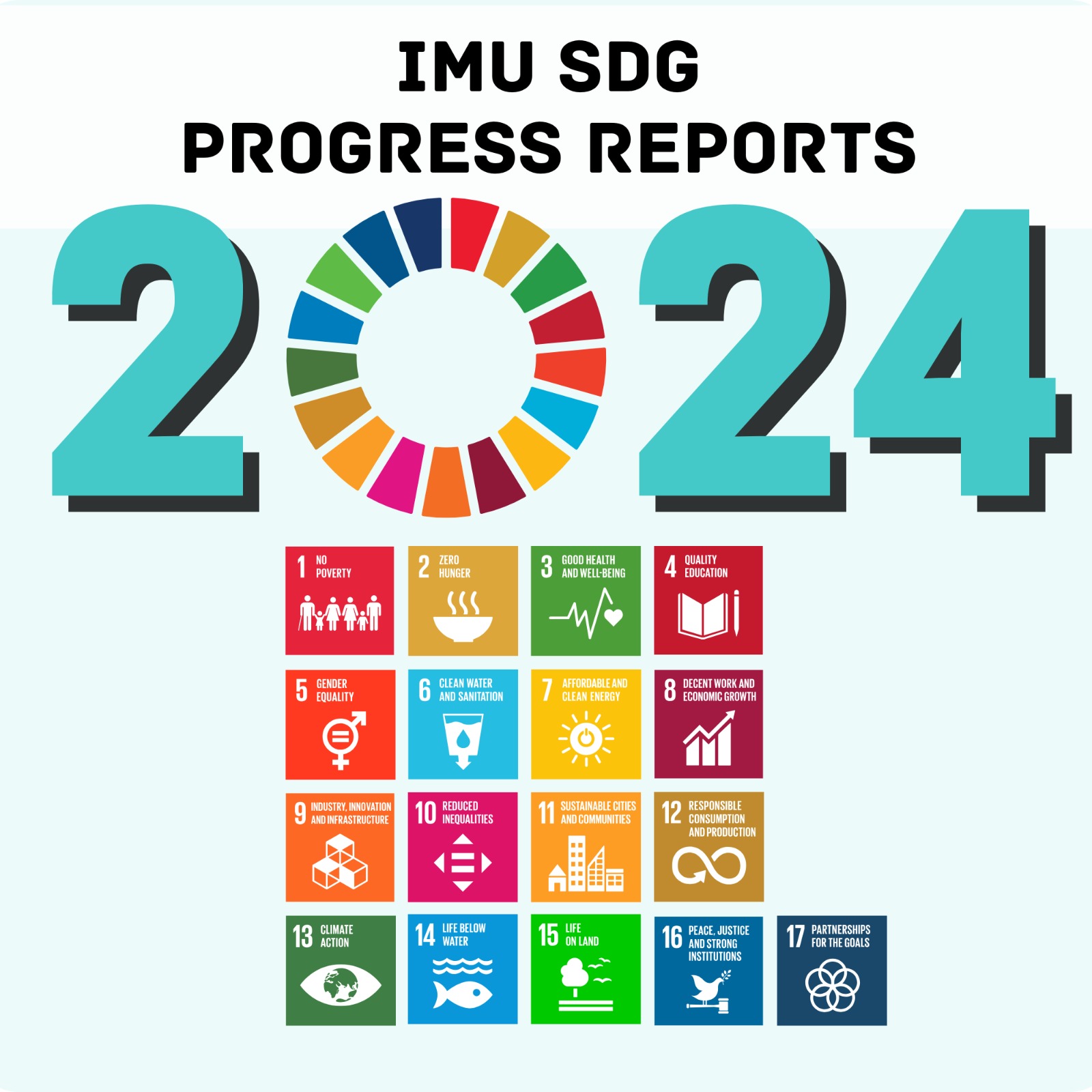
One of the festival’s most unique contributions to raising awareness about sustainable living was the games designed by the team members. The games developed for the festival were created by the Sustainable IMU teams in terms of both content and design, while some of the game materials were produced in recycling workshops held throughout the festival. To achieve this, plastic bottles collected at the plastic recycling workshop established by IMUSUS were first recycled into filament. Then, game pieces were produced using these filaments with 3D printers. Thus, the production process itself, as well as the games, offered an approach consistent with the circular economy, waste management, and zero-waste policies, and provided participants with the opportunity to experience recycled materials. In this respect, the Transformation Festival became an example of an application directly related to many sustainability goals, particularly SDG 12 (Responsible Production and Consumption).
The first game of the event, “Climate and Health” was designed by Sıla Selin ÖZKAN, a second-year student in the Nursing Department at Istanbul Medeniyet University, project coordinator for the Transformation Festival, and member of the student club management board. Developed during the festival, the game was included in the World Play Day program. Designed as a role-play game, “Climate and Health” involved participants taking on the roles of different healthcare professionals and making strategic decisions in emergency scenarios caused by climate change. Conditions changed every round during the game; natural disasters, epidemics, or environmental crises became part of the scenario. Participants experienced not only their own roles but also the process of collaborating with different countries and institutions. While the game raised awareness about many SDGs, it offered content that directly contributed to SDG 3 (Good Health and Well-being) and SDG 13 (Climate Action) in particular. Participants experienced the effects of climate change not only on public health but also on health systems through concrete examples, while also developing strategic decision-making and crisis management skills. The game workshop attracted particular interest from students studying nursing, health management, and similar fields.
The second game of the event was TabuSUS, designed by Ayça ÇELİKBİLEK, a research assistant at the IMU Sustainability Office, and developed in collaboration with the office team. TabuSUS was designed as a word game that teaches participants key concepts related to sustainability through discussion and fun. Noting that the game’s design goes beyond a simple word-guessing game, ÇELİKBİLEK explained its role as an environmental education tool: “The words presented as forbidden words on the game cards are actually the words we use to teach participants these concepts. Therefore, some cards contain words or statistical information that people might never use when explaining the key word. The purpose of this game design is to also convey some information related to those goals within the game. We aimed to convey information through gamification by reflecting topics we consider important onto the cards in this way.” The IMU Sustainability Office team stated that while the game focuses on the issues that need to be addressed to achieve the sustainable development goals, it goes far beyond that, enabling a better understanding of the relationships between the goals and sub-goals. It was stated that during the game, participants were helped to discover that some sub-goals contribute to more than one goal.
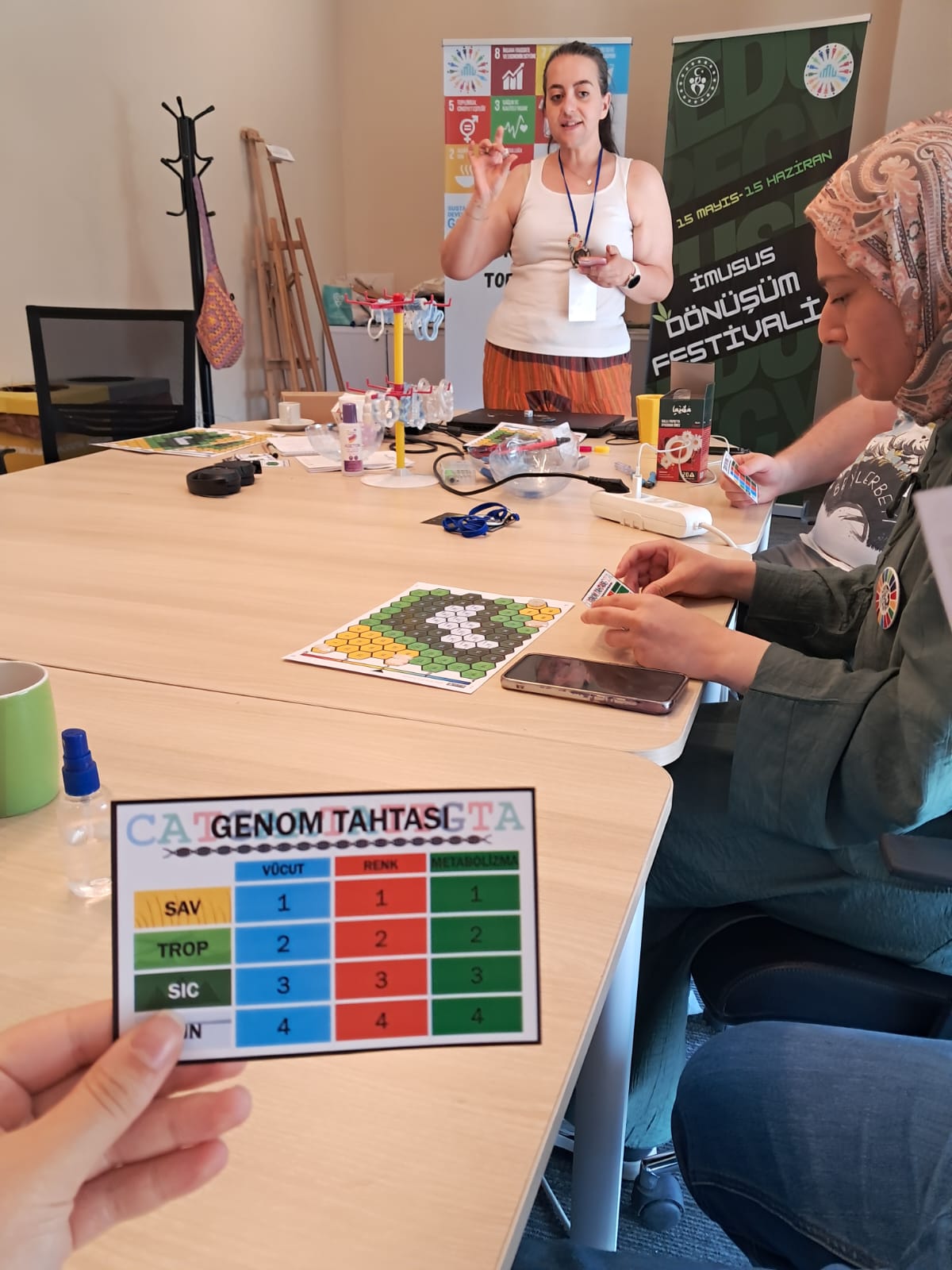
The third interactive game of the day was “Climate Change and Survival” led by Research Assistant Ayça Çelikbilek. Set in four different habitats, this game simulated the struggle for survival of habitat areas and the species living in them, which fluctuate due to the effects of climate change (warming and cooling) caused by human activities on a global scale. Participants faced changing climate conditions through dice rolls; when their characters could not adapt to the new conditions, they had to develop strategies through mutation or resilience mechanisms. Thus, the game taught concepts such as adaptation, mutation, biodiversity, habitat loss, and ecosystem resilience in an experiential way. It also opened up a discussion on the ecological and social consequences of shrinking natural habitats and declining biodiversity as a result of human activities. Directly linked to SDG 13 (Climate Action) and SDG 15 (Life on Land), this game offered participants a fun yet thought-provoking opportunity to experience how not only individuals and societies but all living species and ecosystems can develop resilience against the climate crisis. The game pieces, character symbols, and dice used in the game were produced by recycling plastic bottles in the PET Recycling Workshops held during the festival.
These three games, designed by Sustainble IMU teams and produced using sustainable methods, were presented to participants as part of World Game Day, contributing to the promotion of sustainability awareness on a societal scale. Furthermore, the fact that the production process of the games was aligned with recycling and circular economy principles added a strong environmental message to the event. University students and the Sustainability Office team produced not only the game scenarios but also the game materials, creating a participatory learning model. Thanks to gamification and game-based learning methods, young people had the opportunity to learn about sustainability issues not only as theoretical knowledge but also through experience. At the end of the event, participants were presented with gift packages consisting of zero-waste and sustainable living products.
To join the game workshops designed by the Sustainable IMU teams, you can follow the @surdurulebilir_imu Instagram account, or to organize game workshops at your institution, you can email surdurulebilirlik@medeniyet.edu.tr.