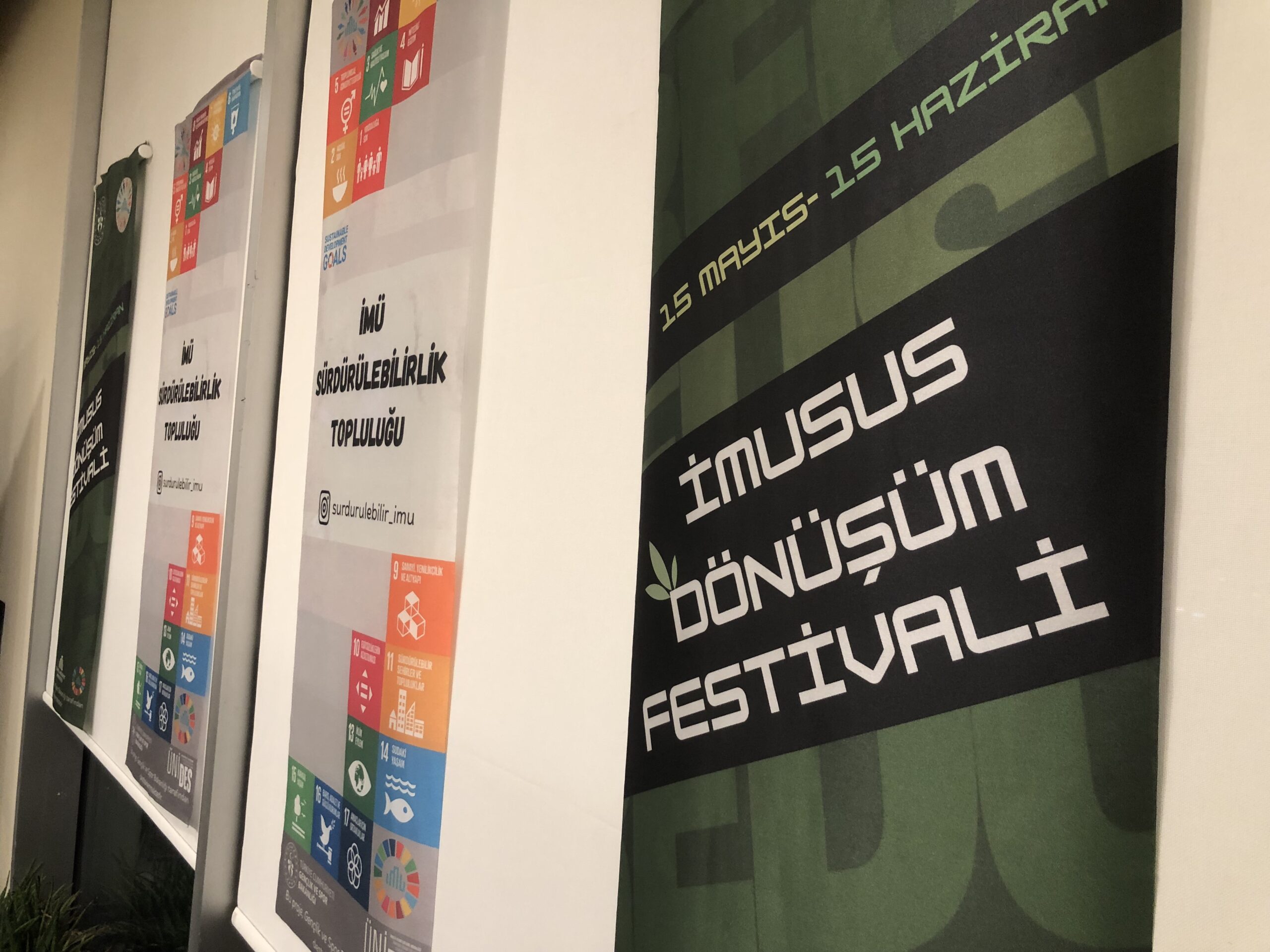
The “Transformation Festival” social responsibility project developed by the IMU Sustainability Student Club (IMUSUS) was accepted into the University Student Clubs Cooperation and Support Program (ÜNİDES) organized by the General Directorate of Youth Services of the Ministry of Youth and Sports of the Republic of Turkey and was awarded funding. Based on the principles of reuse, reduce, and recycle, the festival was organized between May 15 – June 15, 2025, at five different locations: Istanbul Medeniyet University, Kadıköy Municipality Özgürlük Park, Bakırköy Municipality Sanatçılar Park, Maltepe Municipality Productive Disabled Center, and Maltepe Municipality Zübeyde Hanım Day Care Center. It is supported by the Turkish Ministry of Youth and Sports, Istanbul Medeniyet University, Arçelik, and TylmanDesign, in collaboration with Istanbul Medeniyet University, Bakırköy, Maltepe, and Kadıköy Municipalities. The project included 63 workshop events with the participation of 44,236 people, including disadvantaged groups such as women, the elderly, people with disabilities, children, and university students. The project was coordinated by Sıla Selin ÖZKAN, a member of the IMUSUS board of directors, and academically advised by Ayça ÇELİKBİLEK, a research assistant at the IMU Sustainability Office.
ÖZKAN explained the starting point of the project as follows: “The Transformation Festival is a social responsibility project we have undertaken to raise awareness of waste management and environmental consciousness, based on the lack of sufficient awareness of zero waste in society, the limited awareness of upcycling and recycling, and the problems encountered in sorting and collecting waste at source. We want to instill lasting behavioral changes in participants by the end of the project.” The project included workshops on plastic upcycling and recycling, paper upcycling and recycling, aluminum upcycling, and textile waste upcycling. A total of 13 kg of waste was upcycled or recycled in the workshops.
During the Pet Transformation Workshops held as part of the festival, 5-liter plastic bottles collected by participants were flattened using pressure and hot water to make them suitable for recycling. Using the PETMachine filament production machine provided by TylmanDesign, the bottles were first turned into strips and then into filaments. The PET filaments produced were converted into products such as decorative items, key chains, play dough molds, calendar bases, and printing molds using a 3D printer. Thus, while contributing to the circular economy through the conversion of waste, the reduction in solid waste within the campus also contributed to the zero-waste policies in our campus areas and reduced the carbon footprint in campus areas.
In the Plastic Upcycling Workshops, plastic caps discarded from school cafeterias, dormitories, cafes, and parks were collected. The caps were first washed and cleaned, then dried using cloths made from recycled fabric. Various paintings were created using the pixel art technique on waste cardboard collected from markets. During the production process of the works, a total of 2,396 plastic caps were upcycled and turned into 4 works of art. Some of the paintings exhibited at the festival were produced by community members, while others were produced with the participation of the local community at environmental festivals organized by the Bakırköy and Kadıköy municipalities. Sesame Street characters, which remind participants of their childhood, were chosen as the theme for the works produced from the caps. ÇELİKBİLEK stated that the Sesame Street characters were chosen based on the principle of meeting today’s needs without compromising tomorrow’s needs, saying: “Those who come to the exhibition today have to tell their children about these characters, which belong to our childhood and which we all know. If we do not solve the waste problem created by today’s consumption habits, in the future our children may only be able to tell their children about the birds and butterflies we often see in nature today. Because many of these creatures are facing extinction due to human-induced pressures.”
In the Aluminum Upcycling Workshop, another upcycling workshop organized as part of the festival, aluminum beverage cans were collected from school cafeterias, cafes, and festival areas. After being cleaned, the beverage cans were cut into pieces and turned into stamps. Children participating in the workshops produced pixel art images by sticking these flakes onto prepared pattern templates in accordance with the coding. With the collection of aluminum beverage cans from restaurants and cafeterias on campus, the project also contributed to reducing the amount of waste produced within the campus areas and became a corporate responsibility project supporting our university’s zero waste policy.
In another workshop that the student club has been running for a long time, the Paper Recycling Workshops, corporate waste paper was first converted into paper pulp using a blender, a reclaimed product provided to the Sustainability Office by Arçelik. Flower seeds collected from nature by the team were added to the prepared paper pulp. The pulp was filtered from the tank using sieves made from wood waste from school construction. Excess water was removed from the new paper using drying cloths made from waste fabric, and it was left to dry. Once dry and ready for use, the paper was cut to the desired sizes and decorated with flower petals and printing molds produced in PET Recycling workshops to be transformed into various products. These efforts contributed to the zero waste policy on campus and aimed to minimize resource consumption. One of the Paper Recycling Workshops was held at the Maltepe Municipality Disabled Persons Production Center in collaboration with the Maltepe Municipality. In the workshop, where each participant was involved in the process, colorful and seeded papers were produced for use by disabled persons in the production of bookmarks. Participants witnessed how a material considered waste could be transformed into a new product by their own hands; this transformed recycling from an abstract concept into a tangible and compelling gain based on personal experience. The Paper Recycling Workshop, which offers inclusive educational opportunities to individuals with disabilities, contributed to SDG 10 – Reducing Inequalities by supporting the active participation of individuals with disabilities in production processes, while also contributing to cultural sustainability by introducing traditional paper-making techniques. Turning the produced paper into bookmarks enabled the creation of both functional and lasting souvenirs.
New products were also created as part of the Upcycling Paper Workshops. The Polygonal Portraits, which focus on the upcycling of paper, were designed to question whether cardboard bags, which are currently presented as an eco-friendly alternative to plastic bags, could actually create a similar waste burden due to overconsumption. To this end, participants were first asked to bring cardboard bags from their homes to the workshop, enabling them to confront the amount of cardboard bags accumulated in their homes and question their excess usage. Thus, starting from the fact that everyone encountered a pile of cardboard bags in their homes at the beginning of the workshop, the importance of the reduction and reuse approach, which is the first step in waste management, was conveyed. In addition, information was shared that some cardboard bags are plastic-coated and cannot be recycled due to their composite structure. During the workshop, the colorful surfaces of these bags were used instead of paint to create eight portrait-themed works on waste cardboard. These works were also exhibited at the festival’s closing exhibition.
Upcycling Textile Workshops using waste fabric brought by tailors and participants from their homes were held for two different groups: adults and children. In the upcycling textile workshop organized for adults, participants turned waste fabrics into bookmarks. Decorations produced in the PET Transformation workshops were used to embellish the bookmarks. The workshop with children was also the program’s first workshop, the “Upcycling Workshop with Textile Waste” held with children at the Maltepe Municipality Zübeyde Hanım Day Care Center. Two separate upcycling workshops were organized for two different age groups during the event. Using leftover fabrics collected by the IMU Sustainability Student Club from tailors and workshops, unused buttons, and felt pieces left over from the club’s projects, a total of four different finger puppet designs were created together with the children. The 30 participating children first received a simple environmental education covering the topics of recycling and upcycling. Then, upcycling activities were carried out with the children. Seeing the products they created with their own hands at the end of the workshop both reinforced the learning process and increased their motivation to contribute to the environment. At the end of the workshop, the children were also given examples of upcycling projects they could carry out at home with their families. In this way, it made a significant contribution not only to the production process but also to combating environmental pollution and promoting sustainable living practices. This meaningful event encouraged the active participation of vulnerable groups in waste management processes by establishing a multidimensional relationship with the United Nations Sustainable Development Goals. Within the framework of SDG 4 – Quality Education, workshops created participatory and hands-on learning environments for children based on an inclusive education approach. The Upcycling Workshop, organized with textile scraps, allowed children to develop their creativity through the concept of upcycling, while contributing to their early awareness of the environment. The use of leftover materials to make finger puppets in the workshops contributed to SDG 12 – Responsible Consumption and Production by demonstrating how the zero waste vision can be integrated into everyday life practices.
One of the most notable events of the Transformation Festival was the “Sustainability Games” event, specially prepared for World Play Day on June 11. Celebrated annually on June 11, World Play Day was marked this year at Istanbul Medeniyet University with sustainability-focused content. Participants had the opportunity to experientially explore themes such as climate change, adaptation, biodiversity, healthy living, public health, disaster management, cooperation, environmental education, and sustainable development goals through three different games. Hosted by the university’s Sustainability Office, the event was open not only to students and staff but also to external participants. In this way, the event contributed to sustainability awareness both within the university and on a societal scale. The most important point that stood out at the event was that the games were not only fun, but also had educational and thought-provoking content. Participants experienced different dimensions of sustainability by taking on different roles in each game. This approach demonstrated how game-based learning can be an effective method in the field of sustainability.
As part of the festival, a waste sorting game was designed to teach children about the zero-waste system. In the game, children were given information about waste types and recyclable/non-recyclable waste; then, cards with various waste images were shown, and they were asked to throw these wastes into the appropriate recycling bins. This helped raise awareness among children about the separate collection of recyclable waste and recycling and upcycling through gamification. At the end of the game, children were given play dough molds produced in PET Recycling workshops as gifts.
At the end of the festival, 8 Polygonal Portraits and 4 PixelArt Paintings produced in the workshops held as part of the Transformation Festival were exhibited to the public in 2 different areas within the university campus for a week. The exhibition included informative texts explaining the origin of the works and the waste materials used to produce them, raising awareness among both participants and visitors. Visitors who shared photos they took at the exhibition on social media were given glass bottles as gifts.
Workshop visuals related to the project can be accessed via the @sustainable_imu Instagram account.