
The “Transformation Workshops” organized in collaboration between Istanbul Medeniyet University and Maltepe Municipality with the aim of promoting sustainable production and consumption habits, reducing waste generation, and engaging individuals as part of the solution, are completed.
The “Transformation Workshops” social responsibility project, carried out in collaboration between the Istanbul Medeniyet University Sustainability Office and the Maltepe Municipality, concluded with the “Making Keychains and Brooches from Textile Waste Through Upcycling” workshop held on June 19, 2026, at the Feyzullah Community Center. Launched with the aim of promoting sustainable production and consumption habits, reducing waste generation, and empowering individuals to become active participants in the solution, the project allowed participants to experience—both theoretically and practically—how various types of waste can be revalued through recycling and upcycling.
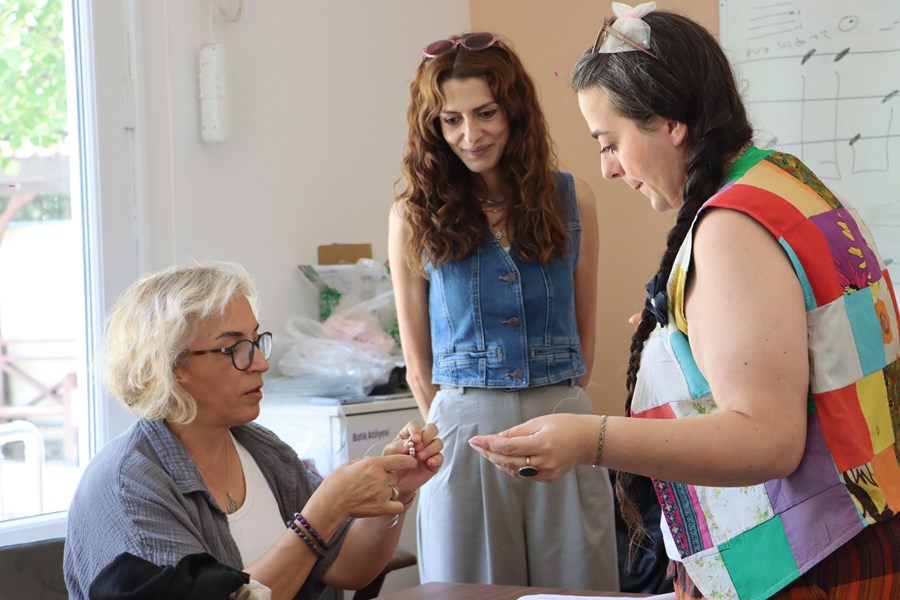
In the final event of the workshop series, organized in collaboration with Maltepe Municipality, scrap beads, denim fabric scraps, and felt scraps were repurposed through creative design processes. During the workshop, participants designed star-shaped keychains from scrap beads and lapel brooches from a combination of beads, denim scraps, and felt scraps. In this way, materials that had previously reached the end of their useful life or were left over from the production process were transformed into aesthetic and functional products, regaining value and helping to prevent waste generation.
In the theoretical portion of the workshop, participants were provided with information on types of waste, waste management, resource efficiency, and the differences between recycling and upcycling. It was emphasized that waste generated in daily life is not merely material to be disposed of; rather, through proper sorting, reuse, and creative design approaches, it can be transformed into new products. It was highlighted that production surplus materials—particularly textile scraps, small fabric pieces, and beads—can turn into textile waste, a situation that creates environmental problems on a global scale and contributes to water consumption and carbon emissions. It was noted that reusing textile scraps through upcycling practices helps both reduce waste and foster sustainable living skills.
During the practical section, participants actively engaged in the production process by creating their own designs. The potential for reusing small-scale materials became evident as scrap beads were transformed into star-shaped keychains; meanwhile, lapel brooches made from denim, felt, and beads demonstrated that textile scraps can be turned into creative and personalized design products. At the end of the workshop, participants took home the products they had created, reinforcing their understanding of the circular economy approach through a tangible experience.
As part of the final workshop, participants were also asked to complete a project final evaluation form. The purpose of this form was to assess the impact of the workshop series on participants’ knowledge, awareness, and behavioral changes regarding waste types, waste management, recycling, upcycling, and sustainable consumption habits in daily life. The final assessment was designed to allow participants to compare their pre- and post-workshop status.
hroughout the “Transformation Workshops” social responsibility project, numerous practical activities were carried out focused on the revaluation of paper, plastic, textiles, and various other waste materials. Through activities such as producing handmade paper from waste paper, introducing the recycling process for PET bottles, creating design products from textile scraps, and transforming various materials into new products through upcycling, participants gained theoretical knowledge and became direct participants in the production processes. The project aimed to integrate sustainable living practices into daily life, with a particular focus on women. Participants gained hands-on experience in the proper sorting of waste, opportunities for reuse, methods for reducing waste at home, and the production of new products from waste materials. In this regard, the project not only raised environmental awareness but also helped participants develop green skills, foster design-oriented thinking, and contribute to the circular economy through production.
The “Transformation Workshops,” carried out in collaboration between Istanbul Medeniyet University and Maltepe Municipality, highlighted the importance of local government-university collaboration in community-based sustainability efforts. The project contributed to the dissemination of concepts such as sustainable production and consumption, zero waste, resource efficiency, and the circular economy at the local level, while offering a practical and replicable social responsibility model tailored to different target groups. The project, which concluded with the final workshop held on June 19, 2026, wrapped up as a comprehensive series of workshops designed to help participants reevaluate waste in their daily lives, question their consumption habits, and adopt sustainable production practices.


