
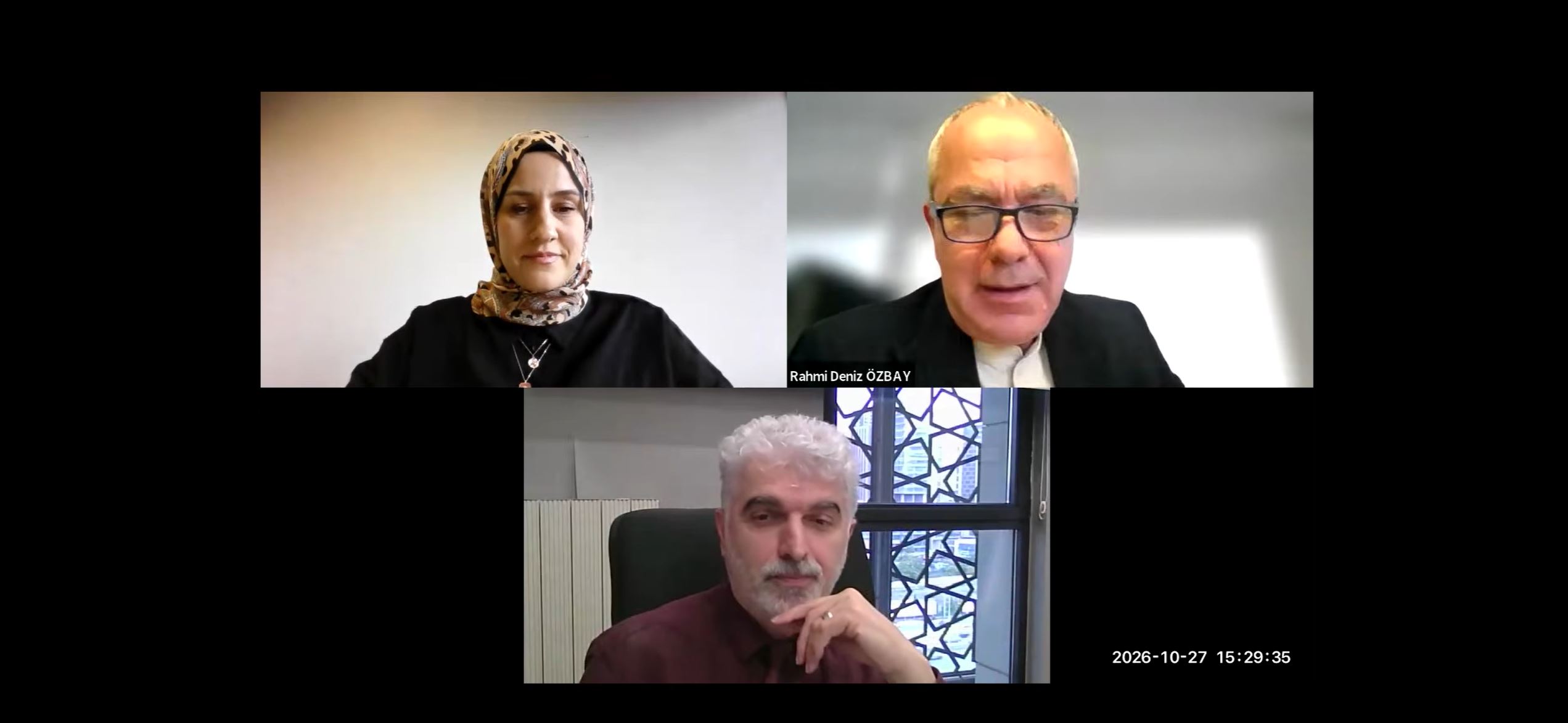
Istanbul Medeniyet University Vice Rector Prof. Dr. Yaşar Bülbül participated as a guest speaker in the fifth session of the webinar series organized by Istanbul Ticaret University as part of the preparations for COP31, held on October 27, 2026. Moderated by Prof. Dr. Rahmi Deniz Özbay, Dean of the Faculty of Business at Istanbul Ticaret University, the session titled “Climate Finance and Trade” addressed Climate Change, Climate Finance, sustainable economic models, environmental performance assessment systems, and the role of technological innovations in Green Transformation.
In his presentation, Prof. Dr. Yaşar Bülbül emphasized that Climate Change is a multidimensional challenge with not only environmental but also economic and social consequences. Highlighting the need to transform existing production and consumption patterns to leave a livable world for future generations, Bülbül stated that promoting Low-Carbon Economy models, advancing climate change mitigation efforts, and ensuring the sustainable use of natural resources are among the fundamental priorities in combating climate change. Referring to international initiatives such as the Paris Agreement and the European Green Deal, he noted that environmental sustainability should not be limited to voluntary institutional commitments but must be supported by concrete and measurable practices.
Addressing the assessment of environmental performance and the effective allocation of sustainable investments in the Green Transformation process, Bülbül discussed the importance of the European Union Taxonomy and Environmental, Social, and Governance (ESG) criteria. He explained that the EU Taxonomy establishes environmental objectives, including climate change mitigation, Climate Adaptation, the sustainable use of water and marine resources, the transition to a Circular Economy, pollution prevention, and ecosystem protection. He further emphasized that indicators such as Greenhouse Gas Emissions, energy consumption, Renewable Energy use, and Resource Efficiency play a decisive role in evaluating institutional sustainability performance. Drawing attention to greenwashing practices, in which environmental claims are not supported by actual actions, he underlined the importance of transparent reporting and independent assessment in Corporate Sustainability efforts.
Emphasizing that Responsible Production and Consumption is a fundamental component of Green Transformation, Bülbül explained that the Circular Economy can be strengthened through the efficient use of natural resources, Waste Reduction, and the recovery and repurposing of materials. He highlighted that Reuse of raw materials and the expansion of Recycling practices offer significant opportunities to reduce resource consumption and the environmental impacts of production. Associating sustainability with the prevention of wastefulness, Bülbül stressed the importance of keeping resources within the economic cycle for as long as possible rather than adopting a single-use consumption model.
The session also addressed the financial dimension of Green Transformation. Prof. Dr. Rahmi Özbay discussed access to financing for Clean Energy investments and Resource Efficiency projects, emphasizing the need for businesses to analyze their current energy, water, and material consumption using reliable data. The discussion covered green investment loans and sustainability-linked financing instruments, highlighting the importance of comprehensively evaluating the technical scope, costs, expected environmental benefits, and long-term economic returns of investments. It was emphasized that green transformation is not merely a process of fulfilling environmental responsibilities but also a strategic transition that supports Sustainable Industrialization, Process Innovation, and the competitiveness of businesses.
In the following part of his presentation, Prof. Dr. Yaşar Bülbül focused on Clean Energy technologies, Technological Development, and the importance of Research and Development Investments. He emphasized the need to accelerate technological research to achieve global net-zero emission targets. Stating that Climate Policy, legal regulations, and economic incentives alone would not be sufficient, Bülbül highlighted that Technological Innovation and the development of economically viable technologies are essential drivers of Green Transformation.
In this context, he provided insights into emerging technologies, including perovskite solar cells with high efficiency potential, offshore Wind Energy systems, hydrogen technologies, and next-generation Energy Storage solutions. Discussing the intermittency challenges associated with Renewable Energy sources such as Solar Energy and Wind Energy, Bülbül emphasized the importance of advancing energy storage technologies to improve Energy Efficiency and ensure the continuity of energy systems. He also addressed the risks associated with dependence on critical raw materials such as lithium and cobalt in battery production, highlighting the need for research into safer and more efficient energy storage solutions.
Bülbül further noted that artificial intelligence and digital systems could contribute to the effective management of energy production, consumption, and storage processes. He also discussed Carbon Capture technologies, particularly Carbon Capture and Storage, as important technological options for reducing emissions. Concluding his presentation, he emphasized that Technological Innovation, sustainable investments, and Resource Efficiency must be addressed together to strengthen global efforts against Climate Change and support the transition toward a more sustainable future.
The webinar can be watched from here.