The “RePlay: From Waste to Toy” social responsibility project, carried out by the Istanbul Medeniyet University Sustainability Office in collaboration with the IMU Sustainability Club, has created a remarkable transformation story by bringing environmental sustainability and social benefit together. The first six-week phase of the project, led by the IMU Sustainability Club, was supported by a grant provided under the Turkish Ministry of Youth and Sports’ UNIDES program, while the plastic recycling processes were supported by TylmanDesign. Under the project, plastic waste collected from hospitals and campus areas was transformed into 10 different toy designs created by university and high school students, following the principles of the circular economy. As a result of the project, 75 toys were produced, and the transformation process prevented the emission of 200 grams of greenhouse gases.
Centered on a circular economy approach, the project aimed not only to recover plastic waste but also to introduce young people to sustainable production technologies, raise awareness of zero waste practices among healthcare workers, and provide social support to disadvantaged children. RePlay introduced an innovative model that treats waste not merely as materials to be disposed of, but as raw materials with economic and social value that can be re-evaluated.
The Transformation Process from Hospitals to Campus
The project originated from the observation that certain plastic waste generated in hospitals, despite being recyclable, was being disposed of alongside medical waste. It was found that plastics technically suitable for both reverse and forward recycling—such as serum and vial caps—were often discarded directly into medical waste bins, resulting in both economic loss and unnecessary carbon emissions.
Building on this issue, the RePlay project was developed; under this initiative, plastic vial caps were collected separately by healthcare staff at Göztepe Prof. Dr. Süleyman Yalçın City Hospital, Ümraniye Training and Research Hospital, and American Hospital. Prior to the collection process, healthcare workers were informed about the composition of plastic materials, their recyclable properties, and the importance of proper waste separation. Thus, the project served not only to collect waste but also to provide environmental education and raise awareness within the healthcare sector.
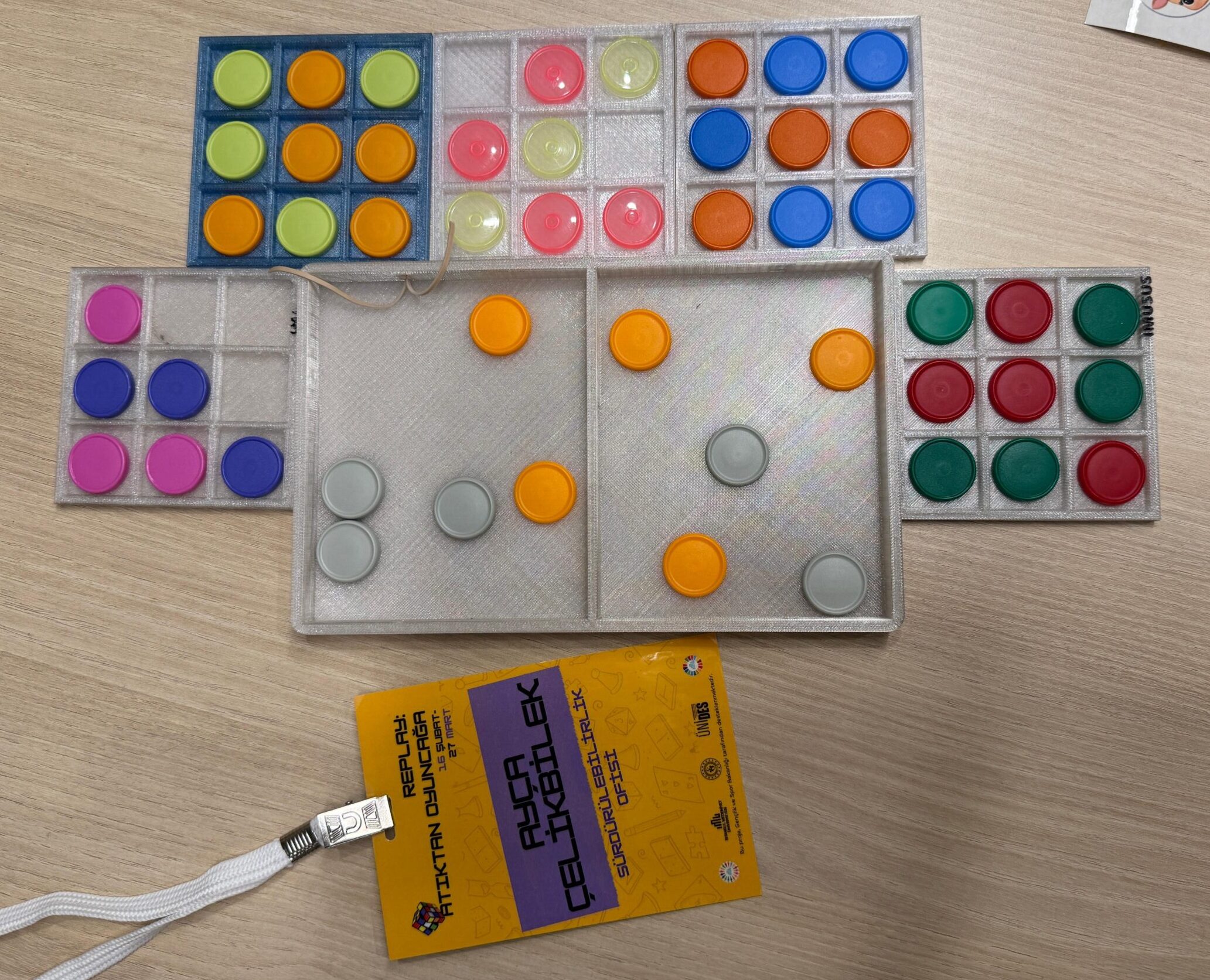
The collected tops were separated from metal parts in the project workshops, disinfected, washed, and prepared for reuse. The PET bottles collected on campus were processed into filament using specialized recycling equipment. All toy parts were printed on 3D printers using filament obtained from the recycling of waste PET bottles on campus. Paper was the only additional material used. Vial caps collected from hospitals were utilized in all toy designs.
Young People Introduced to Recycling Technologies
The RePlay project offered significant benefits not only in terms of environmental impact but also in the fields of education and lifelong learning. Throughout the project, high school and university students gained hands-on experience with recycling and upcycling methods, 3D printing technologies, computer-aided design (CAD), product development, and visual design processes.
As part of the project, faculty members from the IMU Sustainability Office organized various technical training sessions for students. As part of the training program:
- On February 16, 2026, Research Assistant Ayça ÇELİKBİLEK conducted a training session on “Plastic Waste Management and the Circular Economy”
- On February 25, 2026, Research Assistant Furkan ERUÇAR conducted a training session on “Recycling PET Material with PetMachine”
- On March 4, 2026, a training session on “Basic Design Principles and Visual Design with Canva” was delivered by Research Assistant Ayça ÇELİKBİLEK.
These training sessions aimed not only to equip students with technical knowledge but also to develop their competencies in sustainable production, design-thinking, environmental awareness, and creative problem-solving, thereby imparting green job skills to the participants.
Throughout the project, which focused on skill development, hands-on workshops serving different purposes were held each week. Over the 10-week period, 3 training sessions and 45 practical workshops were organized, with a total of 336 participants.
Among the workshops held:
- “PET to Filament Workshops” where PET bottles are recycled to produce filament,
- “Waste-to-Toy Design Workshops” where participants develop materials and rules for their own games,
- “Vial Cap Recycling Workshops” where vial caps collected from hospitals are disinfected and prepared for recycling,
- “Toy Prototype Production Workshops” where test prints of designed games are produced and prototype tests are conducted.
In the workshops, participants did not merely produce toys; they also developed the game rules, visual designs, and rulebooks themselves; thus, by being involved in every stage of the production process, they experienced an interdisciplinary process.
The RePlay project ultimately resulted in the development of a total of 10 different toy and game designs. The toy designs were also enhanced to include educational content. The games, which support children’s motor skills, problem-solving abilities, and creative thinking processes, were designed to incorporate messages about sustainability. Information on which recycled materials were used to produce each game and who designed it was added to each game’s guide. The number of toys produced exceeded 75. While the design and production processes for these games were carried out by high school and university students, they were supported by faculty members from the IMU Sustainability Office.
The toys produced as part of the project were gifted to children visiting the Sustainability Office and to children visiting our university’s booth at environmental festivals, with the aim of fostering environmental awareness in children at an early age.
7.5 Kilograms of Plastic Recycled&Upcycled
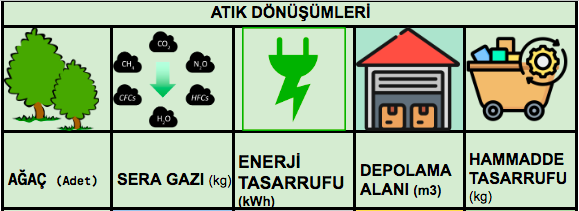
The RePlay project, which directly contributes to our university’s zero-waste policies, also drew attention for its environmental outcomes. During the project, 3.5 kg of PET bottles were recycled, while 4 kg of plastic bottle caps were upcycled. Through workshop activities, a total of 7.5 kg of plastic was reintroduced into the production process. Thanks to this transformation, approximately 200 grams of greenhouse gas emissions were prevented, 43,275 kWh of energy was saved, and the use of 0.122 barrels of oil was avoided.
Thanks to the on-site recycling model established by the Sustainability Office, the reduction of carbon emissions that could result from transporting waste was also among the project’s significant environmental benefits.
The “RePlay: From Waste to Toy” project presented a model of corporate social responsibility by integrating environmental sustainability with social benefit through its holistic structure. The project brought together waste management, the circular economy, green skills training, volunteering, child welfare, and sustainable production under one roof.
Thanks to the project, in which our university students took on an active role as producers, young people did not merely learn about environmental issues; they became part of processes that directly generate solutions. Bringing together diverse social groups—from healthcare workers to students, and from academics to children—RePlay demonstrated that sustainability is not merely a technical process but also a social transformation.
We congratulate Research Assistant Ayça ÇELİKBİLEK, the project coordinator, and the project researchers—Research Assistants Furkan ERUÇAR, Livanur İNAN, Şirin Beyza ÖZBEY, Bedrihan YALTA, Kübra KAYA, A. Alperen KURTAĞZI, and Elif Derin BÜLBÜL for their valuable contributions, and we wish them continued success.